
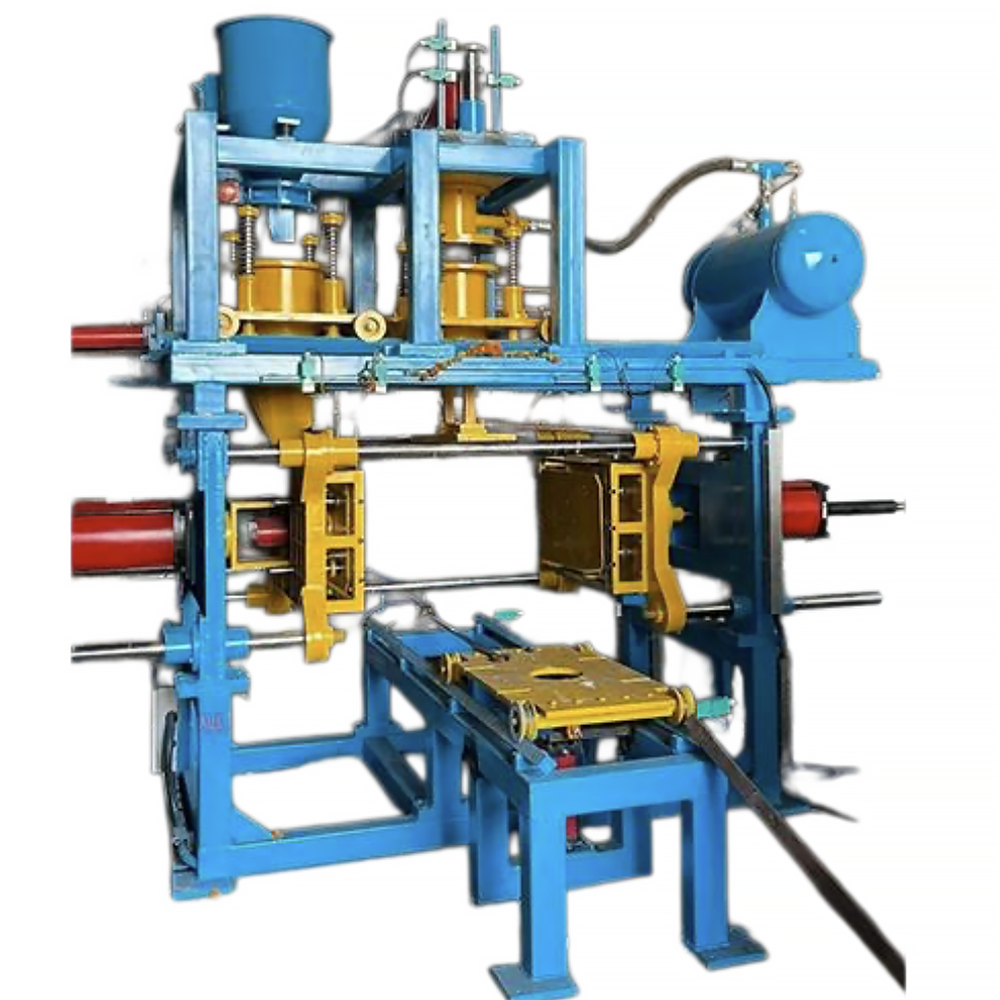
What Information Is Required to Select a Core Shooting Machine?
Selecting the right core shooting machine requires more than knowing the weight or dimensions of a sand core.
Two cores with similar weight can require different machines because of differences in core geometry, core box design, parting method, shooting requirements, core-making process and production output.
For an initial technical evaluation, the most important information can be summarized as:
Core → Core Box → Process → Production
The following information will help an equipment supplier recommend the appropriate machine and configuration.
1. Core Drawing, Dimensions and Weight
The core drawing is the best starting point.
Ideally, provide:
Core drawing or clear photo
Overall dimensions
Approximate core weight
Important thin, deep or complex sections
Core weight alone is not enough to determine machine size. A compact core and a long, thin-wall core of the same weight can have very different sand-filling requirements.
Core geometry helps evaluate the required shooting arrangement, sand flow, venting and tooling orientation.
If a formal drawing is not available, a clear photo with dimensions and approximate weight is sufficient for preliminary evaluation.
2. Core Box Dimensions and Drawing
If the core box already exists, provide its external dimensions:
Length × Width × Height
If possible, also provide the core box drawing.
The drawing helps determine:
Parting direction
Shooting position
Number of cavities
Opening movement
Core-pulling requirements
Venting
Gassing or heating arrangement
A core box being physically smaller than the machine’s maximum core box size does not automatically mean that it is compatible.
The machine must provide sufficient working space, shooting area and tooling movement for the complete production cycle.
For more detail, see Core Box Size vs Core Shooter Size: What Foundries Need to Know →
3. Parting Method and Number of Cavities
Tell the supplier how the core box opens:
Horizontal parting
Vertical parting
Multi-piece core box
Core box with side or front/rear core pulling
This can directly affect the required machine structure.
Also specify the number of cavities per cycle.
A four-cavity core box, for example, must be evaluated according to the total sand requirement, shooting area and tooling arrangement—not simply the weight of one core.
For large tooling, the approximate core box weight is also useful.
4. Core-Making Process
Clearly identify the process:
Cold Box
Hot Box
Resin-Coated Sand / Shell Core
Other process
The process determines important parts of the equipment configuration.
For Cold Box, the supplier may need to evaluate the binder/catalyst system, gassing, purging, venting and exhaust requirements.
For Hot Box, core box heating, temperature control and curing time become important.
For Shell Core, the machine and heated tooling need to be configured around the resin-coated sand process.
If you have not yet decided which process to use, indicate this during the inquiry rather than selecting a machine first.
See Cold Box vs Hot Box Core Making: What Is the Difference? →
5. Required Production Output
Specify the required production rate whenever possible:
cores/hour or cores/shift
For example:
Required output: 40 cores/hour, two shifts per day.
Output affects:
Machine cycle requirements
Single- or multi-station configuration
Number of cavities
Number of machines
Core removal and handling
Automation level
For an existing production process, providing the current cycle time can also help identify whether the bottleneck is shooting, curing, opening, core removal or handling.
6. Number of Core Types and Tool Changes
If one machine needs to produce several different cores, provide information for the complete range rather than only the largest core.
A simple table is sufficient:
Core | Core Size | Weight | Core Box Size | Cavities | Output |
|---|---|---|---|---|---|
A | L × W × H | kg | L × W × H | 1 | pcs/h |
B | L × W × H | kg | L × W × H | 2 | pcs/h |
C | L × W × H | kg | L × W × H | 4 | pcs/h |
Also indicate whether the core boxes will be changed frequently.
This helps determine whether conventional tooling installation is sufficient or whether a faster tooling-change arrangement should be considered.
7. Automation and Existing Equipment
Instead of simply requesting a “fully automatic machine,” specify which operations need to be automated.
For example:
Automatic sand feeding
Automatic core removal
Conveyor transfer
Robotic handling
Core coating or dipping
For retrofit projects, also tell the supplier about existing equipment such as sand mixers, gas generators, exhaust systems and existing core boxes.
For an integrated production project, a plant layout is also useful.
See How a Cold Box Core Making System Is Configured →
Minimum Information for Initial Selection
You do not need a complete engineering package before contacting an equipment supplier.
For an initial evaluation, these five items are normally the most useful:
Information | What to Provide |
|---|---|
Core | Drawing/photo, dimensions and weight |
Core Box | Dimensions and drawing if available |
Process | Cold Box, Hot Box, Shell Core, etc. |
Production | Required cores/hour or shift |
Automation | Manual, automatic or specific operations to automate |
If the core box has not yet been designed, send the core drawing, weight, process and required output first. The machine and tooling requirements can then be evaluated together.
From Core Information to Machine Selection
A practical selection process is:
Core Geometry & Weight → Core Box → Core-Making Process → Production Output → Automation → Machine Configuration
The correct machine should not be selected from one catalogue parameter alone.
The objective is to determine which machine can reliably produce the required core, with the required tooling and process, at the required production rate.
For a complete overview, see How to Select a Core Shooting Machine →
Send Us Your Core Information
For an initial technical evaluation, send us your:
Core Drawing + Core Weight + Core Box Dimensions + Core-Making Process + Required Output
If available, also include the core box drawing, number of cavities and automation requirements.
We can then evaluate the appropriate machine range and configuration for your application.